
Start Training with Expert Coaching, Structured Training Camps and Clinics
Speed • Strength • CNS Training
Coaching focus Sprint to 1500m Road and XC Speed Support
Aurora and local areas Track Sprint Training
All distances are enhanced by sprint based speed training
Track Mid Distance Training
Events: 100m to 1500m
Long Distance Speed Support Training
Special Events and Seasonal Olympian Directed Camp Support
CURRENT SEASON: Outdoor Track Training / Racing
Athletic Victory Speed Club administers a Personal Best–driven track program focused on indoor and outdoor sprint and middle-distance development. Our foundation is speed.
What sets us apart
When sprint speed is developed with precise timing, structure, and intent, it becomes one of the most powerful performance tools in running. Not only for sprinters, but for athletes competing in the 5K, 10K, half marathon, and marathon.
We do not replace endurance.
We enhance it.
Through targeted development of mechanics, power, and neuromuscular efficiency, our athletes run faster, more efficiently, and with greater durability across track, road, and trail.
This is not generic training.
This is performance development with purpose.
Take your running to the next level.
Program Details
Call or text: 905-715-7575
Athletic Victory Speed Club offers high level sprint and middle-distance coaching in Aurora, Ontario and surrounding areas. We train youth, adults, and masters athletes with structured sessions, technical guidance in a supportive team environment. We train 2-3 times per week typically Saturdays or Sundays and Wednesday and Thursdays and offer group training clinics upon request if seasonably available.
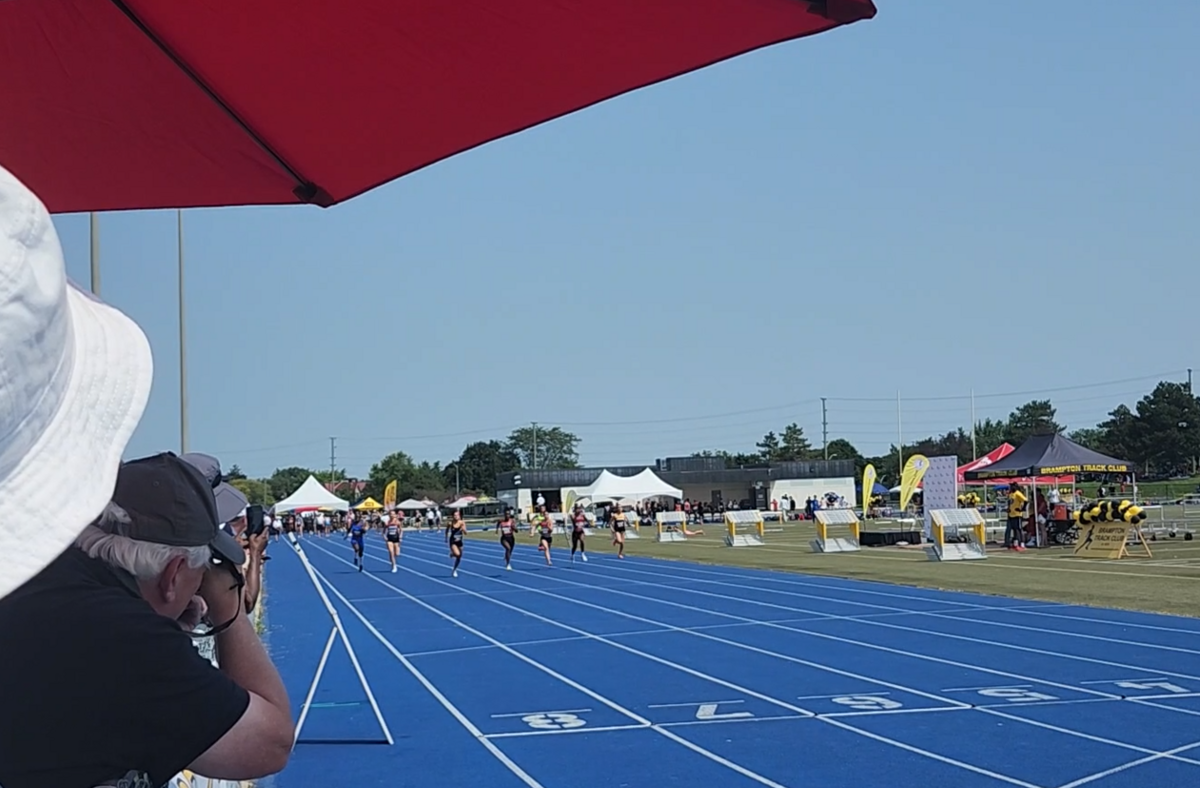
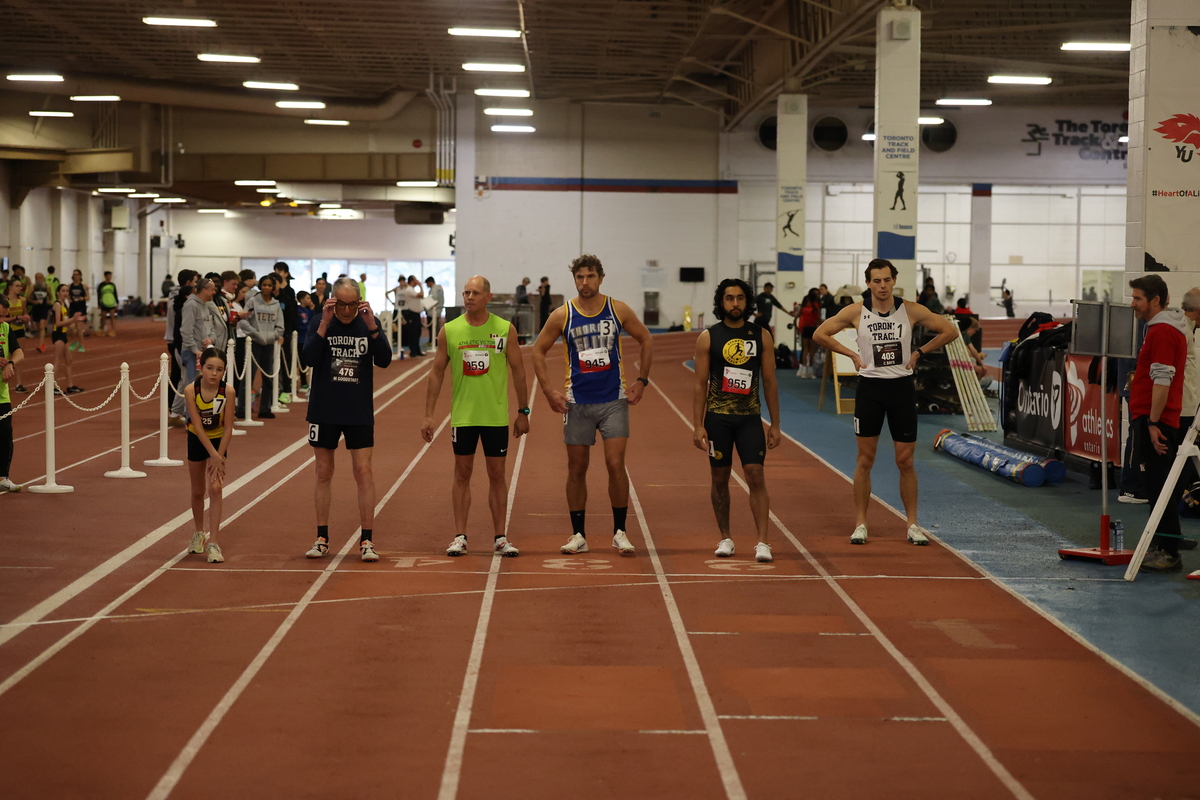
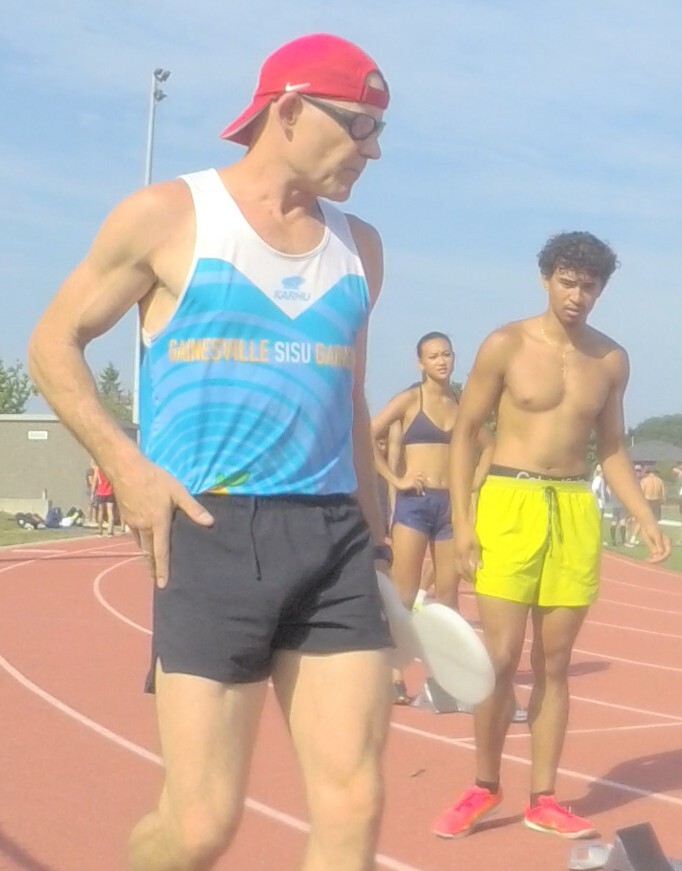
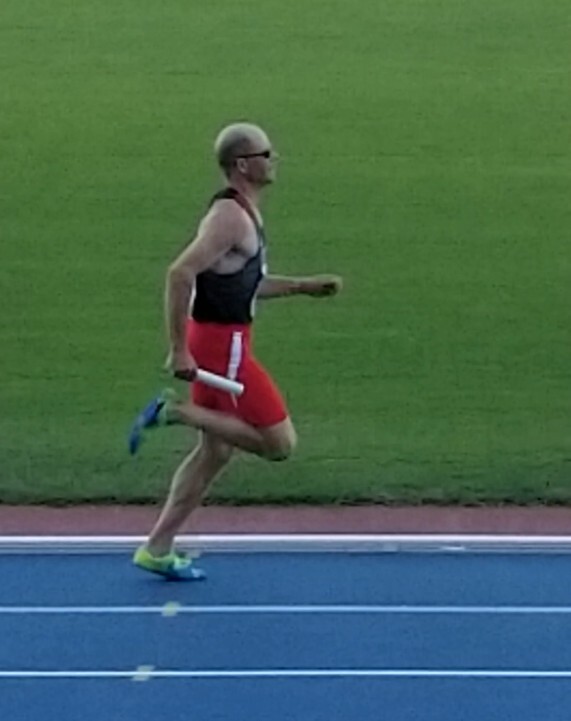

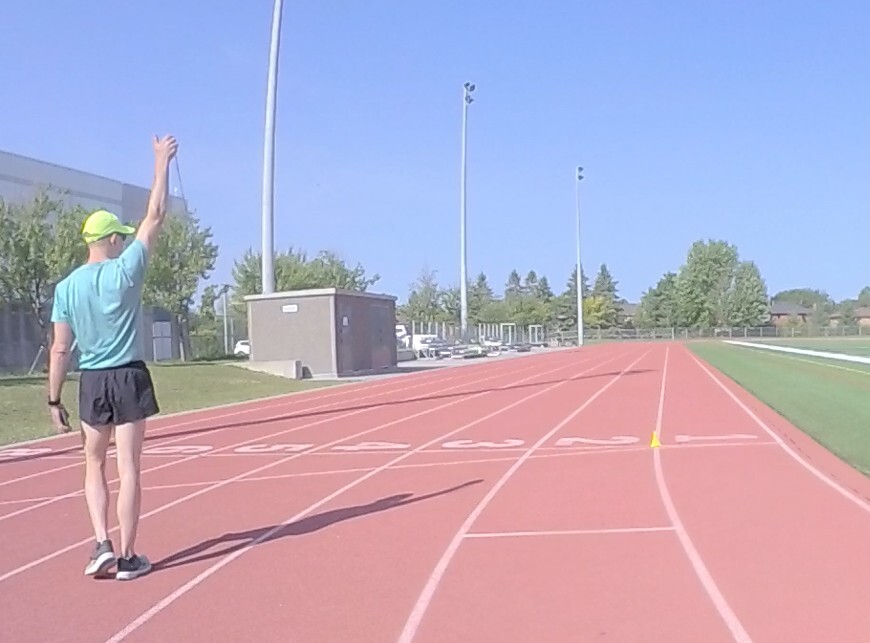
Your Running and Sprinting Victory Starts with a simple try out! We are offering an exclusive opportunity for youth and Master athletes to start or take their performance to the next level. This is your chance to join Canada`s premier technical athletic training program in Aurora, administered by Nationally registered expert coach and coaches in training (National Coaching NCCP certifications)
Prerequisite; capable to run 1KM+ at pace 5:15 min/K (men) and 5:45 min/KM (women) - running shoes / shorts
CALL OR TEXT Coach Mirco Graenert - Don`t delay - all to gain nothing to lose- 905 715 7575 text/call for all inquiries
There will be one more discount this year, coming up 2nd week March - Join us for March Break! Call for details.
REGULAR AVS MEMBERSHIP CAD $495+Tax
membership fees cover coaching 2-3 Days per week of which 1-2 Days are at a track facility.
We train in Three Seasons:
1. Indoor Track competitive option
2. Outdoor Track competitive
3. Off season Strength training and speed or distance maintenance and or Road Running / Racing -XC) competitive option
UNBELIEVABLE - Pricing - NO FUNDRAISING!
- Youth/High School: $ Call for Pricing
- University/College: JUST $50 Try Out (two workouts)- Call for pricing - we generally beat local clubs pricing and no fundraising!
- Sub-masters (24-30): JUST $50 Try Out (two workouts)
- Masters (35+): JUST $50 Try Out
(two workouts)
Call for Special in Season Pricing
You will get Track and other sports facility access, weight room seasonal access at discounted rates and get a free month at our designated Gym
A typical training week has three main elements - Long Run or Sprint Train / Workout 1 / Workout 2
1 to 2 hr hour Training sessions per workout day
Typical Week:
(subject to changes)
Sunday 9AM - Track Workout
MONDAY optional easy or recovery run day PM commencing May 18th
TUESDAY Optional and Perfomance Sport Support Group - May 19th
THURSDAY-Main Workout 1 - evening
FRIDAY - Full rest Day
SATURDAY Optional Easy Run
use of State of the art "FREE LAP" timing equipment
Customized Coach directed workouts / Time Trials / Bio-mechanic Sprint training
Track Race entries prepaid
Slack phone app AVS membership communicator
Muscle and Motion Strength Training Coach directed training - access included
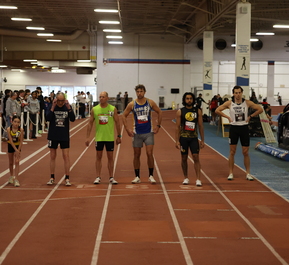
We believe in elevating performance through structured training programs that promote athletic growth for youth, adults, and masters athletes.

Fostering strong community connections through our coaching programs, ensuring every athlete feels supported and motivated.

Our Athletes are registered with Athletics Ontario and Athletics Canada. Get personalized coaching for events ranging from 50m sprints to mid distance Track races. Our experienced coaches are here to guide you.
Enhance your speed with targeted sprint training. Perfect for most all age groups we support, competitive athletes looking to improve your times or those that want to gently or quickly get back to it.
Specializing in strategies and skills for mastering middle-distance training and racing 400m to 1500m for all ages. Our sessions are tailored to meet your individual needs.
Join our dynamic group all year around, enjoy seasonal sessions for a motivating and supportive atmosphere. Work alongside fellow athletes to reach your goals and improve your personal best times. As part of our structured program we offer strength training, plyometric sessions and track training for Sprint and mid distance running and racing
Youth (8+), High School to Sub Master age (25+) Masters age (30+) no age limit,
Primarily Track running, Indoor and Outdoor typical distances for Sprints are 50m, 60m, 100m, 200m and mid distance 400m, 800m, 1500m.
-Age is just a number-
call or text to discuss
Regular assessment time trials and indoor and outdoor racing to monitor your progress, We use state if the art timing devices in training. Official Athletics Ontario and Athletics Canada to build an understanding and make necessary adjustments to your training for optimal performance
Running is a broad term that covers a wide range of activities—from leisurely jogging to elite competition. Because of that, it often causes confusion.
At its most basic level, running is simply cyclical locomotion at a speed faster than walking. Beyond that, intent and execution matter far more than the label.
Running can serve very different purposes:
General health and movement
Social or recreational exercise
Aerobic development
Competitive performance
All are valid—but they are not interchangeable, and they should not be trained the same way.
In our environment, running is purposeful, structured, and performance-oriented.
That means:
Sessions are planned with intent
Effort levels are often high
Technique, posture, and rhythm matter
Recovery is respected so quality can be repeated
We are not a leisurely or casual running group.
Most of our athletes:
Compete regularly in indoor and outdoor track
Train with specific race distances in mind
Measure progress through performance, not just participation
Understand that some sessions are demanding by design
Training is meant to prepare athletes to race—not simply to accumulate miles or time on feet.
Training hard does not mean training recklessly.
Workloads are:
Scaled appropriately to the athlete
Progressed over time
Balanced between speed, strength, and aerobic support
Some days are demanding.
Some days are technical.
Some days are supportive or restorative.
All days have a purpose.
If your primary goal is:
Social jogging
Conversational running
Unstructured mileage
This is likely not the right environment.
If your goal is:
To become faster
To race well
To understand your body and performance
To train with intention and accountability
Then you are in the right place.
Why Most Runners and Athlets Aren’t Actually Sprinting when they go fast;
Sprinting is often described as “maximum effort for 10–20 seconds.” That definition is convenient but incomplete, and in many cases misleading.
True sprinting is not simply working hard. It is a highly technical, neurologically driven skill that very few people—including many elite endurance athletes—can actually execute correctly.
From a performance and biomechanics perspective, sprinting is:
Maximal velocity or near-maximal velocity
Short duration (typically 3–7 seconds of true output)
High technical demand
CNS-dominant, not metabolic
Quality over fatigue
Once posture degrades, ground contact lengthens, or force application drops, you are no longer sprinting—you are straining.
It is correct that the ATP-PC system is dominant in sprinting and is largely depleted within ~6–8 seconds. However, that does not mean sprinting should be extended until output collapses.
In fact, once velocity drops meaningfully, the stimulus shifts:
From neuromuscular speed
To metabolic tolerance
To mechanical breakdown risk
At that point, you are no longer training sprinting—you are training fatigue.
For running, most athletes cannot maintain true sprint mechanics beyond 30–60 meters. Even in the 100 m, athletes hit max velocity around 50–70 m and then decelerate.
The winner is not the one who “keeps sprinting,” but the one who slows down the least.
The only athletes who can maintain extreme velocity for extended durations are rare outliers—such as Wayde van Niekerk—and even then, the 400 m is a special event that blends speed, strength, and extreme lactate tolerance. It is not a template for general sprint training.
True sprint development requires:
Full or near-full recovery
Short, high-quality efforts
Technical consistency
Low repetition count
Careful progression
When fatigue dominates, speed adaptations stop and injury risk rises.
Sprinting is the repeated practice of maximal or near-maximal velocity with intact mechanics and sufficient recovery to preserve output.
That usually means:
3–7 seconds for running
Longer durations only for low-impact modalities (bike, sled, uphill)
Stop the rep when speed drops—not when the clock ends
Mislabeling hard intervals as “sprints” leads to:
Poor speed development
CNS overload
Hamstring and Achilles injuries
Confusion between speed and conditioning
If the goal is conditioning, say conditioning.
If the goal is sprinting, protect the speed.
Sprinting is rare, powerful, and precise.
It deserves to be trained that way.
What Makes Us Different (ages 8 to Masters 30+)
Athletic Victory is not a recreational running program. We’re a competitive speed
development club where every session has a specific technical purpose. All athletes are
registered with Athletics Ontario and Athletics Canada.
The Core Distinction: We teach sprinting as a precise, powerful skill requiring
bio-mechanical mastery - not just “running fast.” Training stops when speed drops, not
when the clock runs out. Quality over fatigue. Precision over exhaustion.
Most youth programs operate on fatigue tolerance: run until you’re tired, then run
more. This builds general fitness but actively undermines speed development. True
sprinting requires technical mastery of force application, ground contact efficiency, and
neuro-muscular coordination. We’re not a casual running group where everyone jogs
together. We’re a technical training environment where every athlete receives
individualized feedback on sprint mechanics, not generic encouragement. Sessions are
designed using evidence-based periodized reloading, and training quality is never sacrificed for
arbitrary time limits or volume targets.
Common Questions
“My child already runs at school. Why specialized training?”
School programs build general fitness. Athletic Victory teaches technical skills that
separate recreational runners from competitive athletes: acceleration mechanics,
maximum velocity posture, ground contact efficiency, and race strategy.
Sprinting requires ground contact times of about 0.1 to 0.25 seconds (amateur) and precise force
application. These are teachable skills requiring coached practice, not just more
volume. School running serves an important purpose - participation and general fitness
- but rarely teaches the technical precision that creates competitive athletes.
Consider
that most young runners have never learned proper hip extension mechanics,
coordinated arm action, or how to maintain speed under fatigue. These aren’t skills you
develop by running more laps. They require deliberate, coached practice with
immediate feedback on body position, force angles, and movement efficiency. Athletic
Victory fills the technical gap that school programs can’t address.
“Won’t intense training cause burnout or injuries?”
Our methodology prevents burnout. We train speed when athletes are fresh, end
sessions when quality drops, and program recovery intentionally. Quality-focused
training reduces injury risk by teaching proper movement patterns.
The athletes most at risk are those doing high-volume, low-quality training with no
technical progression. That’s what causes burnout - not purposeful, technical coaching.
Most people associate “intense training” with exhaustion and grinding through fatigue.
That’s precisely the approach that causes overuse injuries and burnout. Athletic Victory
does the opposite: we train speed as a neuro-muscular skill requiring full recovery
between efforts. Sessions end when athletes can no longer maintain proper mechanics,
protecting against both over-training and injury. Recovery isn’t treated as weakness -
it’s programmed intentionally. Athletes learn proper force application and movement
efficiency, which actually reduces injury risk compared to high-volume programs that
reinforce poor mechanics under fatigue.
“My child isn’t sure about competing. Is this right for them?”
Athletic Victory is for athletes who want to develop speed, possibly alongside another sport such as baseball, volleyball, soccer or even hockey not necessarily those who want nationals from the get go. But we’re not recreational.
If your child wants to learn proper technique, understand their capabilities, and train
with purpose, they’ll thrive here. Many discover competitive drive through technical
mastery. But if they want casual social running with minimal feedback, they’ll find
better fits elsewhere.
Direct answer: If your child isn’t interested in learning technique or improving
performance, Athletic Victory isn’t the right program. Competitive doesn’t mean elite -
it means purposeful. We’re looking for athletes who want to understand how their
bodies work, why certain techniques create speed, and how to train intelligently.
Competition often follows naturally when athletes realize they can actually sprint
efficiently and race strategically. But that discovery requires a training environment
focused on skill development, not just participation. We’re honest about fit because
clarity benefits everyone - your child deserves a program that matches their goals.
What Your Child Actually Learns
Beyond faster times, Athletic Victory athletes develop:
• Neuromuscular coordination that transfers to every sport requiring speed or power
• Body awareness that reduces injury risk across all activities
• Training intelligence - understanding how to progress systematically with
evidence-based methods
• Technical skills elite sprinters use: proper acceleration, maximum velocity posture,
speed endurance, race tactics
Registration Value: Every athlete gets Athletics Ontario and Athletics Canada
registration, providing eligibility for provincial and national competitions, insurance
coverage, and connection to the broader Canadian athletics community.
Athletic Victory teaches a rare, valuable skill: the ability to move your body with power,
precision, and efficiency. This extends far beyond track and field. Athletes who master
sprint mechanics develop neuro-muscular coordination that improves performance in
every sport requiring explosive movement - soccer, basketball, hockey, football. They
gain body awareness that reduces injury risk because they understand proper force
application and movement patterns. Most importantly, they learn how to train
intelligently, using evidence-based principles they’ll apply for life. We’re not just
coaching faster times - we’re developing athletes who understand progression,
recovery, and technical mastery.
Why Technical Coaching Matters
Ground Contact Time: At maximum velocity, foot contact lasts under 0.1 seconds. In
that fraction, athletes must apply force efficiently while maintaining balance. This
doesn’t improve by “running more” - it requires deliberate practice with immediate
feedback.
Speed Reserve: Mid-distance runners (800m, 1500m) need the ability to sprint faster
than race pace. Without it, they can’t change pace strategically or finish strong. Most
youth programs neglect speed work, creating runners who maintain steady pace but
can’t accelerate when it matters.
Quality vs. Fatigue: Sprinting is a neuromuscular skill. Training fatigued reinforces slow,
inefficient patterns. Quality-focused training means shorter sessions with full recovery -
athletes leave feeling powerful, not destroyed.
These concepts explain why technical coaching produces results that volume-based
training cannot. Ground contact time determines how efficiently athletes apply force -
most young runners have contact times 2-3x longer than optimal because they’ve
never been taught proper mechanics. Speed reserve separates tactical racers from
survival runners - athletes who can only maintain one pace have no strategic options
when competitors surge. Quality versus fatigue addresses the fundamental
misunderstanding that drives most youth training: the belief that harder and longer
always means better. When athletes train speed under fatigue, their nervous system
learns to move slowly. That’s the opposite of speed development. Technical coaching
teaches these principles practically, not theoretically.
Next Steps:
Trial Session: Experience a couple of training sessions. Your child works alongside current athletes, receives technical feedback, and sees what purposeful speed development looks like.
No pressure, just clarity about fit.
Observe Training: Parents welcome to watch sessions. See how we coach, what
technical feedback looks like, and why our methodology differs from typical programs.
Direct Conversation: Questions about fit? Let’s talk. I’m honest about whether Athletic
Victory matches your child’s goals - clarity benefits everyone.
The best way to understand Athletic Victory is to experience it directly. Low cost Trial sessions let
your child train alongside current athletes, receive individualized technical feedback,
and see how quality-focused coaching actually works. You’ll observe how we teach
sprint mechanics with specific, immediate corrections - not generic encouragement.
Parents are welcome to watch and see exactly what separates technical coaching from
recreational supervision. Many parents tell me they’ve never seen actual sprint
instruction before - they’ve seen athletes run together, but not bio-mechanical coaching
on acceleration angles, arm action, or stride mechanics. If you have questions about
whether this program fits your child’s goals, let’s have a direct conversation. I’m honest
about fit - if recreational running serves them better, I’ll say so. Clarity benefits
everyone.
The Bottom Line
This isn’t sales copy. It’s educational authority. Parents who understand the difference
between recreational running and technical sprint coaching recognize Athletic Victory’s
value immediately.
We’re building the best speed club in Canada through evidence-based coaching,
technical excellence, and competitive development. If that matches your child’s goals,
let’s talk. 905 715 7575 ask for Coach Mirco
Mid-distance running is often misunderstood as “long sprinting” or “short endurance.”
In reality, it is a distinct performance discipline with its own physiological, bio-mechanical, and neurological demands.
Mid-distance typically includes:
400 m
800 m
1500 m
Each sits on a continuum between pure speed and endurance, but none are dominated by slow aerobic work.
True mid-distance performance requires:
High absolute speed (you cannot race fast without being fast)
Speed endurance (the ability to maintain mechanics under fatigue)
Aerobic support, not aerobic dominance
Exceptional rhythm, posture, and relaxation at speed
This is why many strong endurance athletes fail at 400–800 m racing, and many sprinters struggle when aerobic support is missing.
Mid-distance running is not aerobic jogging at race pace.
Approximate contribution:
400 m: predominantly anaerobic, with aerobic contribution supporting recovery and repeatability ~(60%-40% respectively)
800 m: roughly balanced aerobic / anaerobic
1500 m: aerobic-dominant, but still speed-limited (~12% Anaerobic, 88% Aerobic)
The limiting factor is rarely VO₂max alone.
More often it is:
Loss of force application
Breakdown of mechanics
Inability to buffer and tolerate by-products while maintaining speed
Excessive slow mileage can:
Dull neuromuscular sharpness
Shift fiber behavior toward endurance
Reduce elastic stiffness and stride efficiency
Mid-distance athletes must protect speed year-round, even when building aerobic capacity.
Mid-distance running is the ability to express high speed repeatedly and rhythmically while resisting mechanical and metabolic decay.
It is not about surviving fatigue.
It is about maintaining form, force, and intent as fatigue rises.
When mid-distance is trained like distance running:
Speed becomes the limiter
Tactical racing becomes impossible
Peak performance windows shrink
When it is trained like sprinting plus aerobic support:
Athletes stay fast
Racing options expand
Longevity improves (especially for Masters athletes)
Join Athletic Victory Club today and reach new heights in your athletic performance! call OR text 905 715 7575
Although Athletic Victory Speed Club is new, as coaches and athletes we have been around for decades. We have enabled athletes to medal in provincial, national and international events. Get started in your journey and see where it can take you!


Monday
Optional Train Day
Tuesday
Optional
Wednesday
6:00PM Training
Friday
Rest for Victory
Saturday
8:30AM Training
Sunday
Optional training day